My research and film partner Stacey Guill is spending time in Spain this summer, she’s invited back to The Hemingway Conference in San Sebastian, and Bilbao, Spain.
She’s taking with her our latest project, a film called, “They Still Draw Pictures.” This is a short film about children’s art during The Spanish Civil War. They will be showing this movie at the conference, and Stacey is on a panel there.
Stacey also has been invited to do a live podcast on Hemingway’s SCW short stories!
Our film also recently became a finalist in the Madrid Arthouse Film Festival. This is a powerful short film that I’m hoping can be shown for years to come.
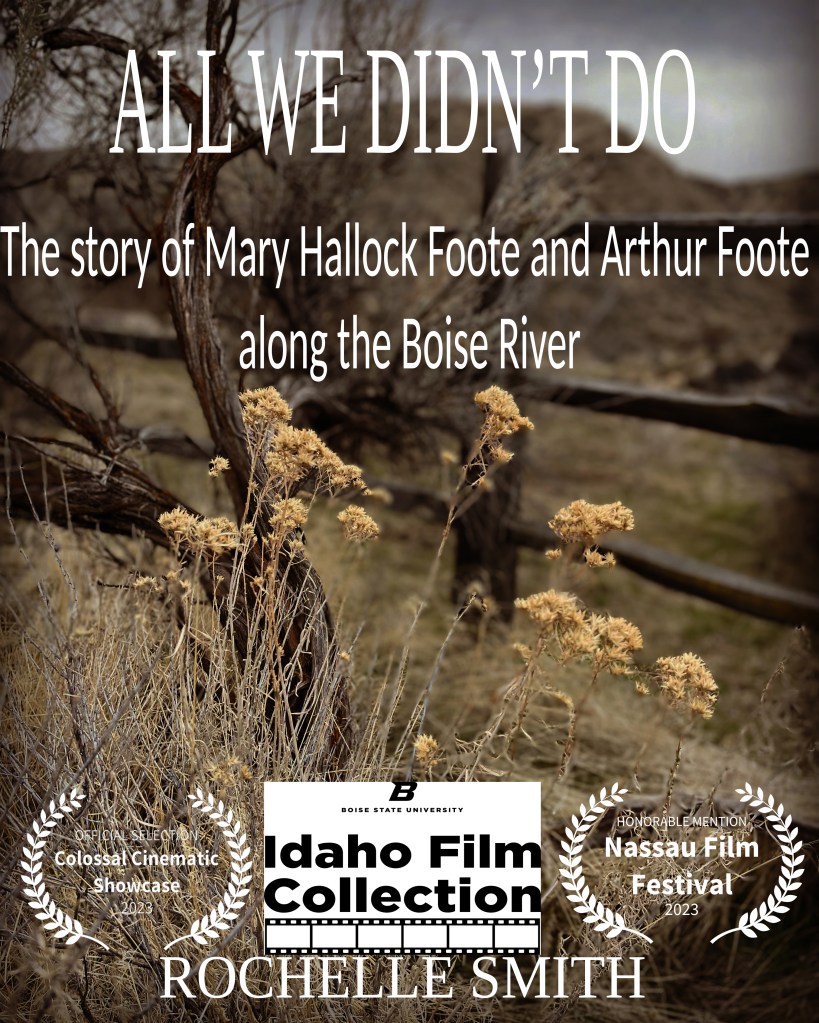
Previously, Stacey and I worked on a film called, “All We Didn’t Do,” about the life of famous author/illustrator Mary Hallock Foote when she and her husband lived below what is now Lucky Peak.
Stacey and I are very excited to have “All We Didn’t Do,” make another local appearance this summer! It will be a part of Global Lounge‘s World Village Fest. Details coming soon, but we know the film will be shown Friday, September 27th at Treefort Music Hall before a live music performance begins. Stacey will be there to sell copies of her book, “Stone House in the Cañon,”
Both of the above films have been helped with support from Idaho Film Collection, and the films are now archived in BSU’S Albertson’s Library to be a part of Idaho’s history.
IFC also supported and archived my film, “Pink Feather.” It’s been shown from Boise, to Stockholm, India to Tokyo, and other countries worldwide. This film was in the circuit for years, and I’d like to share a link for you here if you would like to watch it. It was shown locally at Colossal Cinematic Showcase, The Lounge at the End of the Universe, and The Balcony. We sadly lost our Director of Photography, Theresa Palmgren. She had also done stellar work for KTVB Channel 7. Our community very much felt her passing
Pink Feather by Rochelle Smith, Starring Karma Rose, Coco Freeo, JRS, Syd D’Licious, singer LP, and many others.
It’s been too hot to do as much filming as I’d like, and I’m trying to learn more about how the new required Boise Film Permit will affect a mostly solo documentary filmmaker such as myself. I understand it is needed for large film crews, and apparently a high speed chase a few years ago got out of hand, inspiring this new law. Between this law and the possible upcoming DJI Drone Ban in the U.S., I think it’s a miracle I was ever able to get some drone footage.
A short film in the works features parts of a project from photographer Andrea Scott. This will be a piece focusing on how “Basques and their dogs shaped the American West with Idaho icon, Jay Sisler.”
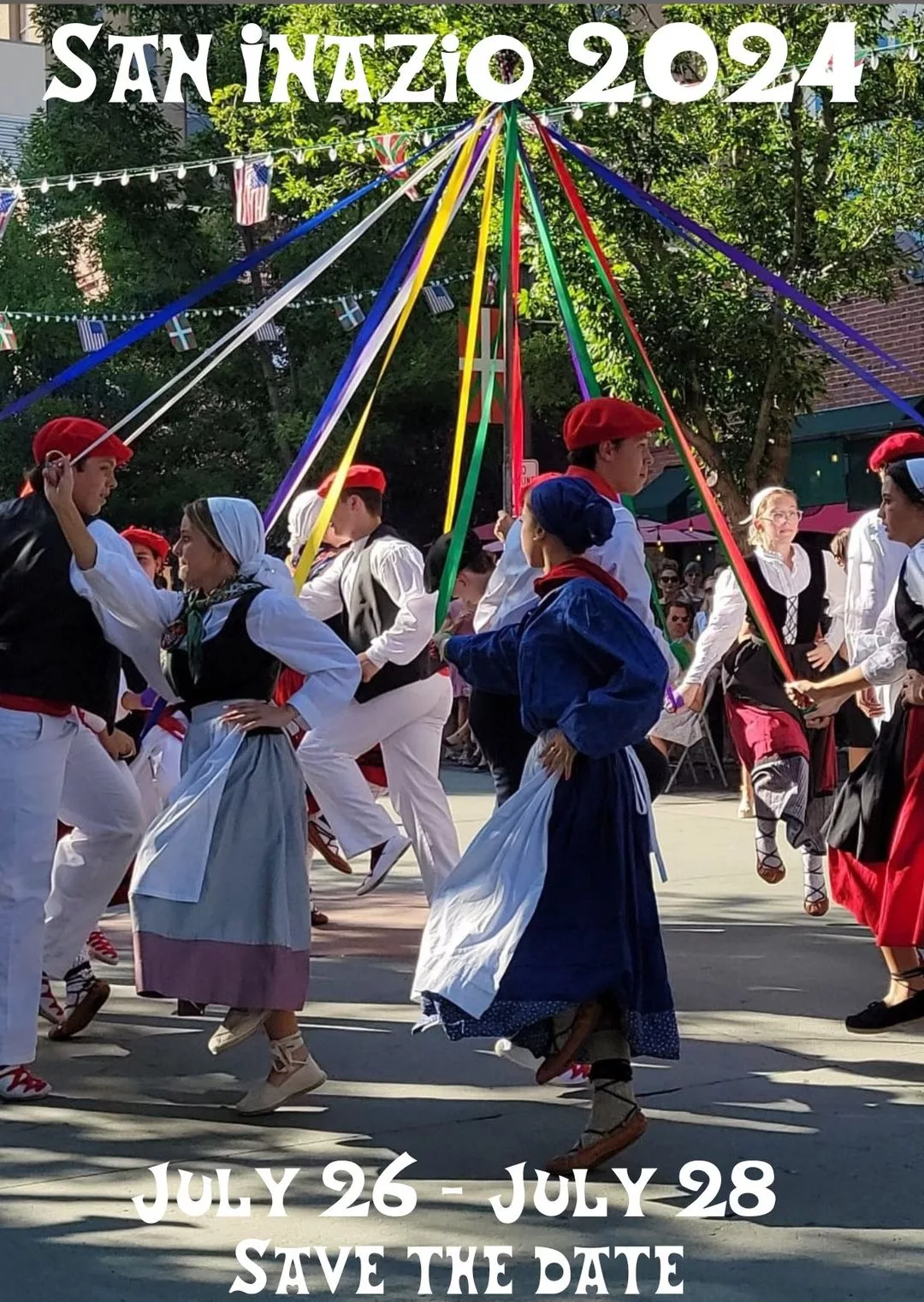
Working on this now, with a tie to Basque culture. San Inazio Festival is at the end of this month, and Jaialdi returns in 2025!
This is my latest short film. It’s a different approach to the podcast I had recorded with author Stacey Guill, PhD, who wrote “Stone House in the Cañon.
Here is a behind-the-scenes blog that goes way beyond the movie.
For many years, I’ve taken whatever dogs I had at the time to hang out once in a while at Discovery Park. It’s a good place to chill out, and watch the water. I noticed a few things happen across the river, then a plaque appeared saying there used to be a stone house that a famous artist and author, Mary Hallock Foote and her husband Arthur Foote used to live in. Mary Hallock Foote had done illustrations in this house for books written by Louisa May Alcott, Tennyson, and many other famous authors.
Her husband was an engineer, who was trying to build waterways and dams in the Treasure Valley. While he struggled for income, his wife’s drawings and articles kept them going while they raised children in this stone house in the valley, with helpers including a cook and a nurse who lived there as well.
I found myself taking more trips out there, hiking longer, finding more clues about what life was like across the river. I studied books, archaeological digs, and years of historical documents. I discovered that this stone house was actually built on an important Native American site that had originally been an encampment to make all types of hunting blades from the nearby obsidian. The more time I spent out there, the more I saw it through different eyes. Artifacts were dug up, covered up, and locked up in special collections that most eyes will never see.
At first, I imagined Mary Hallock Foote, from her upper-class background hating the first part of her residence in Boise. I imagined her drawing from the rooms in the house, taking her kids to the beach, taking a rickety canoe or footbridge across the river, and tending horses in the park area I would hang out in. I feel in her writings, you could see a transformation of respect from resentment at times. You have to wonder how someone kept small children out there away from rattlesnakes and a dangerous river. She came to love the view, and the sound of the river.
I would guess that local people didn’t necessarily welcome them with open arms as well, and not knowing the western ways, I’ll bet the Footes were sometimes taken advantage of.
I imagined the stagecoaches traveling from The Oregon Trail and Bonneville point, being lowered down those treacherous canyon walls. I tried to imagine the river without Lucky Peak or Diversion dam. I tried to imagine women not being allowed to vote, or how the prohibition era must have been in Boise.
Going through Stacey Guill’s book, many hours of research and looking into the artwork of Mary Hallock Foote, I wanted to put Stacey’s words to some of the beautiful drawings, and take a creative approach.
“All We Didn’t Do,” was made with months of research, editing, getting photos and aerial shots, looking at library art and special reference collections. For a while it seemed to meet some resistance, I questioned myself as to why. I wondered if maybe the original spirits who reside there are tired of their land being exploited. Some might think it’s strange, but I made a special trip out there to talk to them. I apologized for the hundreds of people who had stomped around and built there without acknowledging them. I thanked them for letting a beautiful park exist there so people could imagine the same things that I have from over 100 years ago and more. I hope that everyone who goes out there takes a moment to reflect on this, and give respect to the Native American tribes who were pushed out of the area. Just a few years before the time the Footes were going to gather volcanic rock for their home with a beautiful view, a treaty forcing Native Americans within 30 miles of the Boise River, from Table Rock to Eagle Island, was enforced to vacate those areas. Even though the treaty wasn’t law, it was enforced. I stand there now on those banks, and can imagine the pain and sadness of their relocation. You can feel them there. I wonder what they think of the hundreds of paddle boards on the water on a summer day there.
Maybe this is why Wallace Stegner won a Pulitzer Prize for what seems to be a mostly plagiarized and fictionalized tale of their lives in his novel, “Angle of Repose.”
Maybe this is part of why Arthur Foote ultimately failed on his engineering plan of Treasure Valley waterways, only for Boise to have success using his very plans, once they had moved away. They did so much in planning and developing, yet I would guess that very few Boiseans know their names.
I feel honored to know about, and share just a portion of intense history of this area. I am grateful that Idaho Film Collection felt it was a project worth supporting, and this film will be forever archived at BSU Albertsons Library. They also supported my film “Pink Feather,” and I do not at all take this support for granted.
Anyway, all this to say you can see my film “All We Didn’t Do” May 7th at Colossal Film Festival at Overland Park Cinema. It is a great local film fest that starts at 4pm. Everyone going can take part in the red carpet photos before it starts, and there will be an after-party at Mad Swede on Cole. I really hope to see you there.
Also, just for fun, I was able to interview someone I’ve admired most of my life from The Carol Burnett Show.
Just minutes from Boise, Idaho, a short drive can take you back over 100 years in history. Listen to author Stacey Guill talk about the life of Mary Hallock Foote. As Mary’s husband Arthur struggled to engineer waterways around the city, Mary did illustrations for Louisa May Alcott, Nathaniel Hawthorn, and some publications that brought our pioneer western life into the awareness of people living in the east.
Author Wallace Stegner wrote a book on Mary’s life that is more fiction than fact. She didn’t get much credit for it, and he won a Pulitzer Prize.
A play called “Fair Use” was written and performed about them both. Our friends at Radio Boise have a chance for you to hear a performance at this site.
Stacey Guill has done over 20 years of research on Mary Hallock Foote, and is full of knowledge about Foote Park. You’ll want to get her book, “Stone House in the Cañon.” She designed one of the information plaques at the park, and continues to learn more about this family, and their story.
Let your mind journey into Mary’s life and story, and let yourself experience the journey by taking the drive across Lucky Peak dam, turn right, and find the park at the end of the road by the river.






 Rochelle Smith Productions